
Bring a new laboratory service into routine operation.
I help coordinate the sample flow, instruments, methods, LIMS requirements, procedures and training needed for go-live. The work starts with what is already in place and a clear plan for what still needs to be ready.
At ABC Labs, I led the technical work as an existing testing operation developed an accredited toxicology service, working with an eight-person team and QA. Before that I brought new services into routine many times inside a hospital department.
- New services into routine, many times
- 1 laboratory to a new accredited scope, 22 months
- 2 building moves, drawn first
- Remote first · Sweden, Europe and the Asia-Pacific
5 dependencies
Readiness: what exists, and what still has to be ready
On day one a laboratory being commissioned usually has some of these: instruments on order or on the bench, methods developed or transferred, a LIMS chosen or inherited, people hired for a different kind of work, and a date. At go-live it needs all of them working together, with a quality system that can show it. The plan is built around the dependencies between them, so that work which can run in parallel does, and work that has to wait is not started twice.
- Scope and sample flow
What the service reports, for whom, and how a sample moves from requisition to retention. This decides what every other stream has to carry, so it is written first, and revised as the others learn things.
- Facilities and instruments
Site preparation, dimensioned drawings facilities can work from, installation, vendor commissioning, and then the laboratory’s own commissioning against its own samples. Long lead times, so this stream starts early and runs beside the methods.
- Methods and systems
Method development or transfer, validation under an agreed framework, and the LIMS requirements for registration, worklists, interfaces and reporting. Validation waits for commissioned instruments; the requirements do not.
- Procedures and people
Procedures in your document system, QC with limits from the laboratory’s own data, EQA enrollment, and the people trained on the procedures that exist, with records that say so.
- Go-live review
The checklist worked through before the first customer sample, with named owners for anything still open, and the handover of the plan to the people who will run the service.
3 sizes
Three sizes of engagement
- Readiness review
A walk-through of what exists, against what go-live needs, and a written plan: what is missing, who owns it, what depends on what, and the order I would take it in. A few days.
- A defined workstream
One stream taken on end to end alongside your team: instrument site preparation and the laboratory’s own commissioning, the validation program, the sample flow and LIMS requirements, or the procedure set and QC design.
- Coordination alongside your team
The plan kept, the dependencies watched, the technical decisions prepared for your project lead and your quality manager, and the go-live review run, over the months the project takes.
7 deliverables
What you get
The plan
- Plan and readiness assessment
Every stream, dependency, owner and milestone on one page, and the state of each: exists, exists on paper only, does not exist yet.
- Sample-flow design
The end-to-end flow, requisition to disposal, for every sample stream, with the systems chart beside it.
The build
- Instrument commissioning
Site preparation, dimensioned drawings, site acceptance protocols against your samples, and the laboratory’s own commissioning report before anything is reported off the instrument.
- System and LIMS requirements
What the LIMS, the registration and the instrument data systems have to carry at go-live, specified from the flow. The deeper version is LIMS requirements.
- Validation coordination
The framework, and the plans and reports sequenced against the go-live date; the validations themselves can run as fixed-price packages.
Go-live
- Procedures, QC and training
Which procedures the scope needs and in what order, controls and limits, EQA enrollment, and the people trained on what exists. Where an automated step is part of the service, that is laboratory automation.
- Go-live and handover
The checklist signed before the first customer sample, and the plan handed to the people who will run the service.
22 months
Relevant experience
ABC Labs in Stockholm was founded in 2020 as a high-volume covid testing operation and had to become an accredited drugs-of-abuse laboratory: not a laboratory built from nothing, but an existing operation that had to become a different one, with a team of eight nearly all taken on for covid testing. We wrote the flow first, in nine steps across five sample streams, and the scope, ISO 15189 and EWDTS, was accredited in October 2023 as Swedac 10532, with QA alongside. The method development was shared work; what I owned was the validation plans and reports, the data analysis between them, the risk assessments, and putting each method into production.
- 8People in the team, most of them new to mass spectrometry
- 22 monthsFirst day to an accredited toxicology scope, with QA alongside
- 9 · 5Steps and sample streams in the flow document, written first
The instruments had their own commissioning. When a new LC-MS/MS system was installed, the manufacturer’s engineer commissioned it against the manufacturer’s specification and it passed; I then wrote the laboratory’s own commissioning report before a result went to a customer: a repeatability benchmark in the room it stood in, repeated after a hardware change, and a method comparison against the system already in production. The same suite went through two building moves, drawn first: the bench modeled to the millimeter, and at Forskaren the rooms themselves, with the architect leads and against the manufacturers’ site preparation guides. On the clinical chemistry side, I set up creatinine and amylase on the laboratory’s Indiko analyzer, and when two Abbott Alinity analyzers arrived later I transferred those methods across with instrument comparisons.
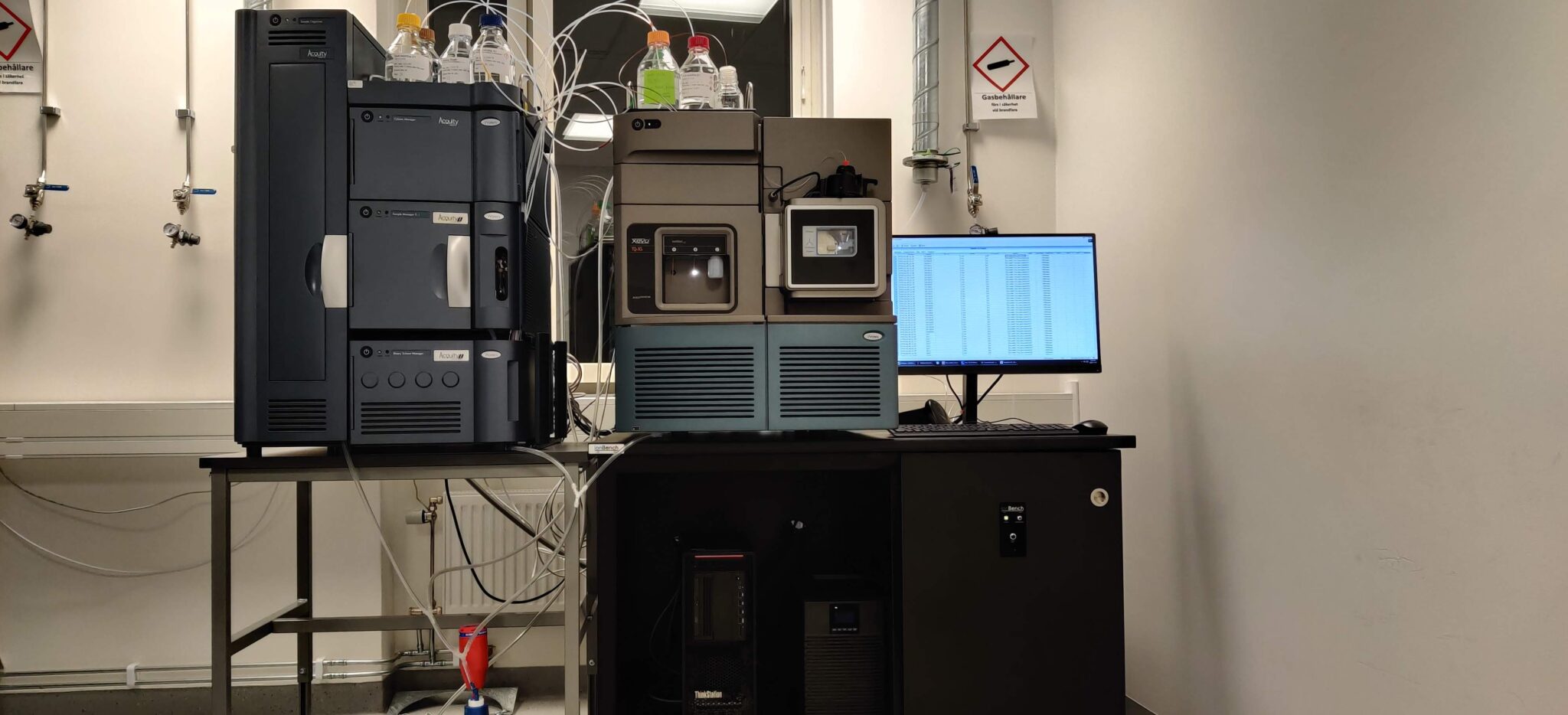
Before ABC Labs, eleven years in clinical pharmacology at Karolinska University Hospital, inside an accredited department: instruments implemented as well as operated, worklists integrated with the automation platforms, new methods and new decks brought into routine. The build is on the selected work page: from covid testing to an accredited toxicology laboratory, the flow it was built around, and from the crate to routine work.
4 steps
How the work runs
- ReviewA walk-through of what exists, on site where the project needs it and remotely where it does not, and a written proposal: what is missing, the dependencies, and the order I would take it in.
- PlanThe commissioning plan and the readiness assessment, with owners and dates, agreed with your project lead and quality manager.
- BuildThe flow, the procedures, the quality records, the instrument commissioning and the system requirements, with your staff and in your systems.
- Go live and hand overInstruments commissioned by the laboratory, methods validated, QC running, the checklist worked through, the first routine run, and the plan closed and handed over.
Most of the plan, the documentation and the coordination runs remotely; site time is for what cannot be done from a desk, and for the go-live. A longer on-site engagement is open for the right project. Engagements run from a few days to several months and are quoted in writing before they start; the commercial answers cover the rest.
Scope
Scope and responsibilities
You work directly with me through Ebihara Solutions: I plan, design, build alongside your staff and hand over, and I will say on the first conversation if what you need is a team on site for a year. I am not an accreditation body and I do not write regulatory submissions for you; the certificate is won by the laboratory and its QA function, and my work is to get the operation to the point where it can be. I do not sell instruments or represent a platform, so the laboratory’s own commissioning is written from the laboratory’s side. The record above is Swedish and European; for a laboratory under another authority I would read its requirements alongside you before assuming any of it maps across.
Six services
First step
Discuss your go-live plan
Describe what exists today, instruments, methods, systems, people and procedures, and what has to be operational at go-live, with the date if there is one. I will reply with the questions I need and tell you which stream I would start with. The first conversation is free. The terms, travel and the other commercial answers are on the contact page. If you would rather not use a form, write to [email protected].
Contracting
- Consulting delivered through Ebihara Solutions (Sweden), a sole trader approved for F-skatt; organization and VAT numbers on every invoice.
- Your NDA signed and your document control followed; no professional indemnity insurance; laboratories in Sweden, Europe and the Asia-Pacific.